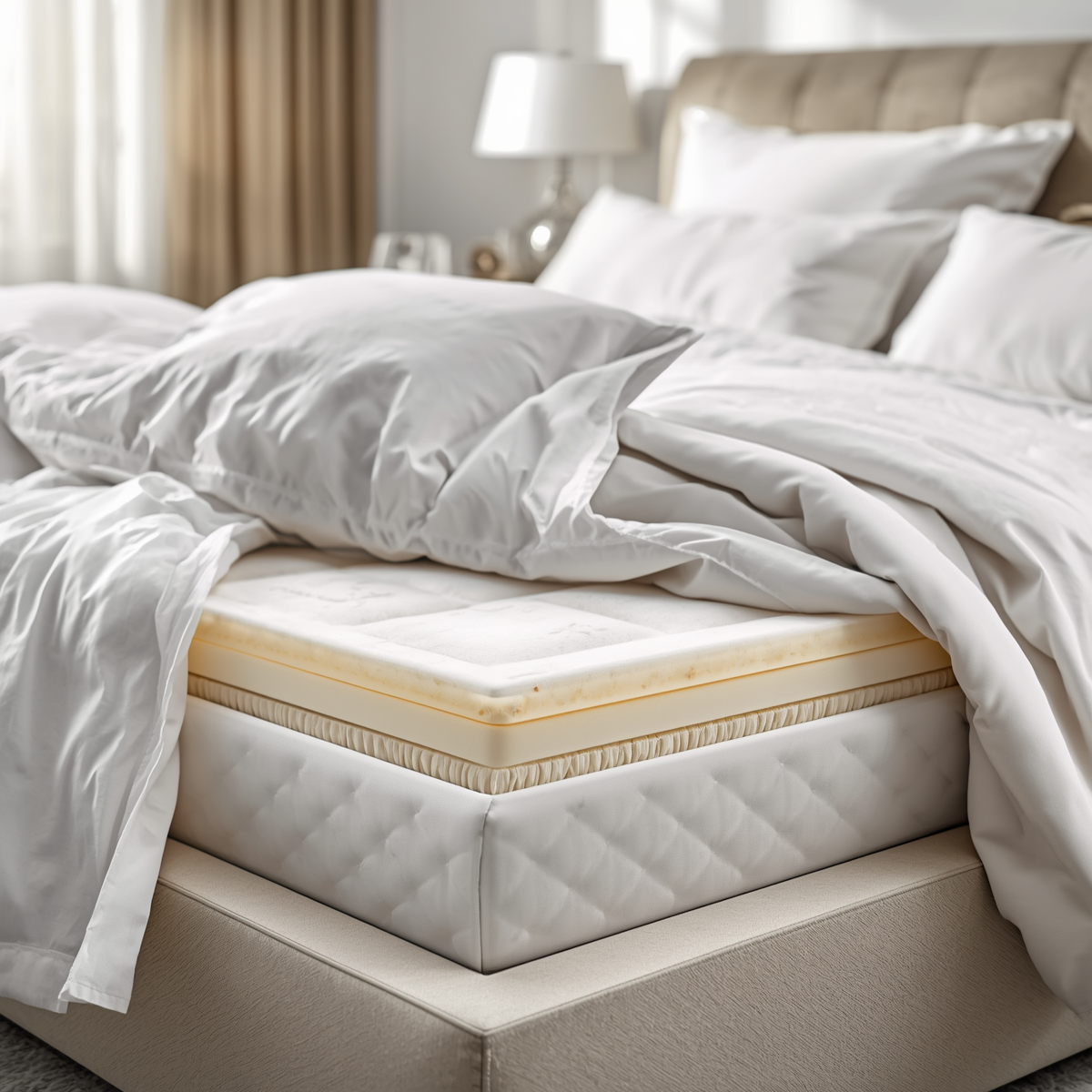
If you followed our last post, you know that a mattress is a piece of health equipment, not just a block of furniture. You also know that as the price moves up, you are paying for higher-quality, heavier-duty materials.
But if you walk into a store or browse online, you are going to get hit with a tidal wave of technical jargon. Manufacturers love to make mattress construction sound like rocket science.
It isn’t. Stripping away the marketing fluff leaves three main mattress types on the market today. Let’s peel back the covers and look at exactly what you are paying for.
1. The Innerspring: Connected Coils vs. Pocketed Coils
Innersprings have been around since the 1870s. They were a massive leap forward from stuffing woven bags with leaves, straw, or horsehair. But not all steel coil systems are created equal. In fact, you can confidently divide them into two categories:
Connected Coils (The Old Way)
You might hear salesperson terms like Bonnell, continuous, or offset coils. You can safely ignore all of those names. If you tore the top off one of these beds, you would see that every single spring is wired or clipped together in some way.
- The Reality: They are perfectly functional and durable, but because everything is tied together, they lack nuance. If you move, the whole bed moves. Today, you usually only find connected coils in basic, entry-level mattresses.
Pocketed Coils (The Modern Standard)
Instead of being wired together, every single coil is encased in its own independent fabric pocket.
- The Motion Miracle: Because the springs aren’t tied together, they offer incredible motion separation. If your partner tosses and turns on their side, the energy doesn’t transfer to your side.
- True Contouring Support: Because each spring compresses independently, the heavier parts of your body (shoulders and hips) can settle deeply into the bed, while the lighter parts (your waist and neck) receive independent support.
- Why did it take so long to dominate the market? Historically, sewing individual pockets was incredibly labor-intensive and expensive. Modern manufacturing changed that, making pocketed coils the gold standard for support.
2. The All-Foam Option: Memory Foam vs. Latex
An all-foam mattress swaps out the steel springs entirely, layering specialized comfort foams over a rigid, high-density foam core. The two heavy hitters here are Latex and Memory Foam.
- Latex Foam (Springy & Bouncy): Invented in the 1920s using natural tree sap from rubber trees, latex is a soft, spongy material with a feel of natural push-back. (You can buy natural or synthetic varieties). If you hate the feeling of sinking into a bed and prefer to feel like you are floating on top of it, latex is your go-to.
- Memory Foam (Dense & Melting): Originally invented by NASA in the 1960s for aircraft seats, memory foam responds directly to your body weight and temperature. It slowly molds and shapes to your exact curves.
The Inside Secret on Price Swings:People often look at a $150 memory foam mattress online and wonder why another one costs $3,000. It isn’t a rip-off; it’s what’s inside. That $150 discount mattress usually has a razor-thin half-inch layer of cheap, low-density foam over a stiff base block. It will bottom out fast. A premium memory foam mattress utilizes deep layers of heavy, high-density foams engineered to relieve pressure points for a decade.
3. The Hybrid: The Best of Both Worlds (When it’s True)
The word “hybrid” has become so overused by marketing departments that it’s almost meaningless on a spec sheet. Let’s separate a “True Hybrid” from the marketing hype.
When memory foam first took off, early models had two major complaints: they slept hot (trapping body heat), and some people felt “stuck” when trying to roll over.
The True Hybrid was invented to solve both problems. It takes the top half of a premium memory foam mattress (thick, contouring comfort layers) and stacks it directly on top of a pocketed coil spring system.
- The coils bring back the bounce, completely eliminating that “stuck” feeling.
- The open space between the springs allows air to flow freely, cooling the mattress down.
Beware the Fake Hybrid
Many manufacturers call any traditional innerspring bed with a little extra foam a “hybrid.” It isn’t.
A traditional innerspring mattress has a heavily quilted, tight top layer that compresses the foam underneath. A True Hybrid uses a soft, highly stretchy fabric cover that sits directly against the foam with no tight quilting in between. The fabric is designed to stretch with the foam, allowing you to sink directly into the pressure-relieving material.
The Outliers: Airbeds & Gel Grids
If you venture outside the big three, you’ll run into a couple of specialized specialty options:
- Airbeds: We aren’t talking about camping mattresses. These are premium, high-tech systems that use adjustable air chambers. They allow couples to change the firmness level on their specific side of the bed independently. They offer great flexibility but sit firmly in the premium price tier.
- Gel Grids: Originally used in hospital beds to prevent sores on bedridden patients, this technology replaces foam comfort layers with a stretchy, hyper-elastic rubber-like grid over a core of coils or foam. It offers exceptional, near-zero pressure relief. If you have severe shoulder or hip injuries, it’s a fantastic option, though the floaty, unique feel takes some getting used to.
The Bottom Line
There is no “magic” technology. High-end mattresses often layer memory foam, latex, and pocketed coils together to take advantage of the strengths of each material.
Now that you know how these beds are built under the hood, our third and final part of this series will cover the actual showroom strategy: how to properly test a mattress and select the perfect match for your sleeping position.