Do you wake up tossing and turning with low back pain? Do you deal with poor circulation, annoying snoring, or sleep apnea? What about that burning sensation of acid reflux?
If you’re nodding your head, you’ve probably tried everything from special pillows to over-the-counter supplements. But there is one game-changing solution that can help with all of these issues, and it doesn’t come in a pill bottle.
For most of us, bedtime looks pretty standard: we lie flat on our backs or sides, rest our head on a pillow, and hope for a solid eight hours. Sounds normal, right? But the truth is, when we shift from an upright position like sitting or standing to laying completely flat, a few things happen beneath the surface that can quietly ruin our sleep quality.
Here is what is actually happening to your body when you lie flat, and the surprising tool that can fix it.
The Problem with Lying Flat
- Your Airway Constricts: When you lie flat and drift off to sleep, the soft tissues in your airway relax. This natural relaxation causes constriction, which directly leads to snoring and sleep apnea.
- Acid Reflux Takes Over: Think of your stomach like a water bottle that is half full. When the bottle is standing upright, the water stays at the bottom. But if you lay that bottle on its side, the water instantly spreads from top to bottom. The exact same thing happens to your stomach acid when you lie flat. Without gravity keeping it down, it easily creeps up into your esophagus.
- Your Lungs Get Compressed: Imagine placing a water balloon on a table—it immediately spreads out. Your stomach is basically a bag full of fluids. When you lie flat, it spreads out and pushes upward, compressing your lungs and reducing the amount of air you can easily breathe in.
- Lower Back Strain: Lying flat on your back forces the natural curve of your spine to flatten. Because of the weight and shape of your thighs, gravity pulls them down, putting a constant, nagging strain on your lower back.
- Hip Misalignment: If you’re a side sleeper, think about your anatomy—you are naturally narrower at the ankles than you are at the hips. Lying on your side on a flat mattress pushes your hips out of alignment, causing that familiar morning discomfort in your lower back and hips.
- Fluid Retention: We spend all day on our feet, and gravity naturally pulls fluids downward (which is why your shoes might feel a bit tight by 5 PM). Lying completely flat doesn’t do much to help reverse that fluid buildup.
The Solution: An Adjustable Foundation
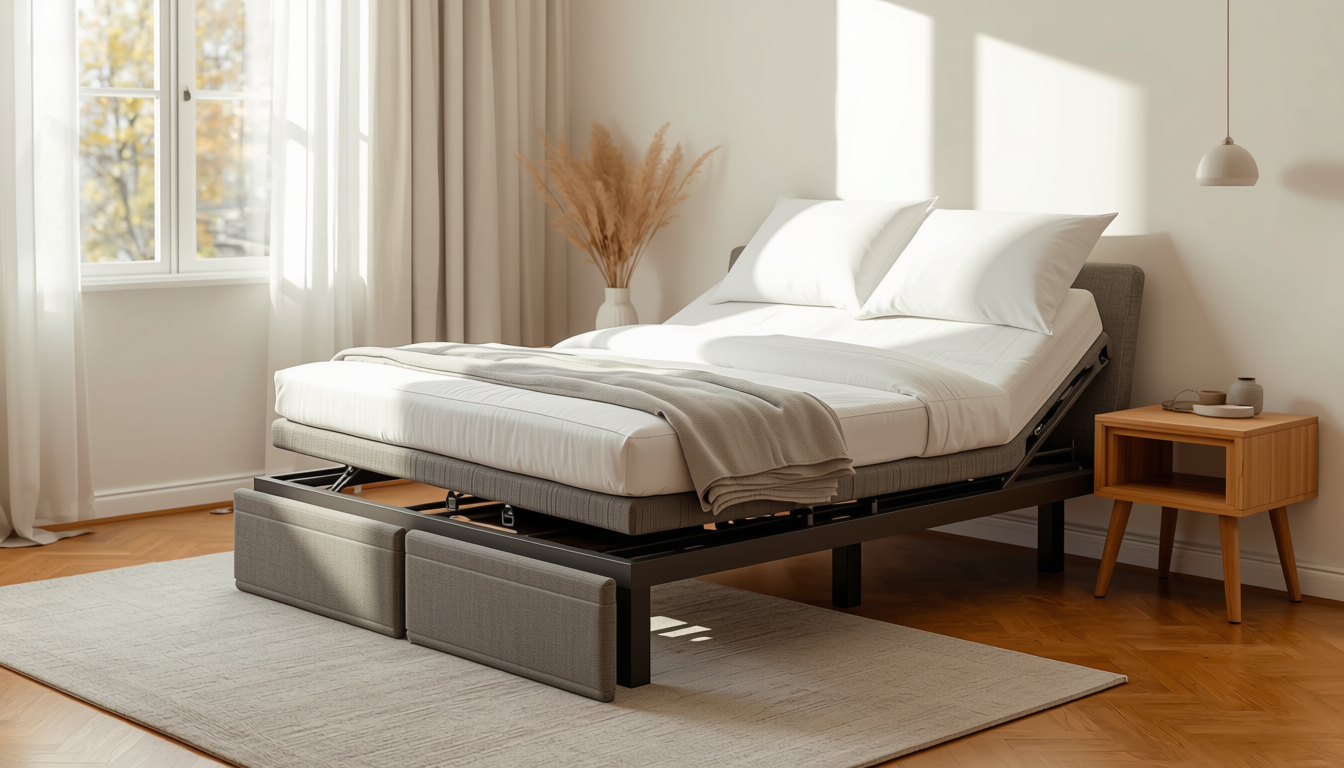
Fortunately, there is something you can add to your current sleep system to fix all of these issues: an adjustable foundation.
Now, a lot of people immediately think of hospital beds when they hear that term. But there is a very good reason hospital beds adjust to elevate the head and feet—it offers massive health benefits. And today’s adjustable bases are sleek, modern, and designed for everyday comfort.
Here is how an adjustable base transforms your sleep, no matter your preferred position:
For Back Sleepers
Elevating your head just about 5 degrees is often all it takes to open up your airway, improve your breathing, and drastically reduce snoring. It’s also the ultimate defense against acid reflux, using gravity to keep those stomach acids exactly where they belong.
At the same time, raising your feet relieves the pressure on your lower back and boosts circulation. Because your feet are elevated, your heart doesn’t have to work as hard to pump blood back up your body.
For Side Sleepers
You might think an adjustable bed is only for back sleepers, but that’s a myth. Even on your side, a slight elevation of the feet helps align your hips and spine into a much more comfortable, pressure-free position. A gentle elevation of the head can still help with breathing and reflux, too. Just keep the angles mild—extreme elevation on your side can feel a bit awkward.
For Stomach Sleepers (Or Ex-Stomach Sleepers!)
First, a quick reality check: sleeping on your stomach is notoriously tough on your body, often causing back, neck, and shoulder pain. But an adjustable base can actually help train you out of it.
I used to be a strict stomach sleeper, and it wreaked havoc on my back and shoulders. When I got an adjustable base, I started every night on my back or side with the head and feet elevated. In the beginning, I’d wake up a few hours later, flatten the bed, and flip onto my stomach. But over a few months, I stayed comfortable on my side longer and longer. Ten years later, I’m a happy, pain-free side sleeper!
But what if you love stomach sleeping and refuse to give it up? There is good news for you, too. When you lay on your stomach, your glutes (the heaviest muscles in your body) press down and flatten your spine’s natural curve, causing lower back pain. Many premium adjustable bases now feature a lumbar lift—similar to the lumbar support in a quality car seat. For a stomach sleeper, engaging the lumbar lift slightly raises your hips, relieving that heavy strain on your lower back.
Beyond Health: The Lifestyle Benefits
Aside from the incredible health perks, an adjustable bed just makes life better.
Many of us love to watch TV in bed, usually propping ourselves up on a mountain of pillows. The problem is that pillows support your head but leave your neck hanging in a strained position, leading to a stiff neck in the morning. With an adjustable base, you can keep your favorite supportive pillow and simply raise the head of the bed. If you fall asleep watching your favorite show, your body remains perfectly supported.
You can also raise the upper half of the bed into a full sitting position to work on a laptop, read, or do crafts. In fact, I am actually typing this very article from the comfort of my adjustable bed right now!
Final Thoughts
Your bed shouldn’t just be a place where you lie flat—it should be a customized sleep system that works with your body’s anatomy. Investing in an adjustable base is one of the best choices you can make to reduce pain, breathe better, and truly improve your quality of life.